%2520opla.webp)
Opla is a European peer-to-peer secondhand marketplace where users buy and sell clothing, furniture, electronics, and more across France, Belgium, Luxembourg, and the Netherlands. In the first week following their in-app community launch, they reached one of the highest engagement rates in the Octopus portfolio: a clear signal of the appetite users have for community in value-driven e-commerce apps.
51% of active app users visited the community in its first week
+3k messages published by +5k unique community visitors
2.2x more app sessions for community users vs. non-community users
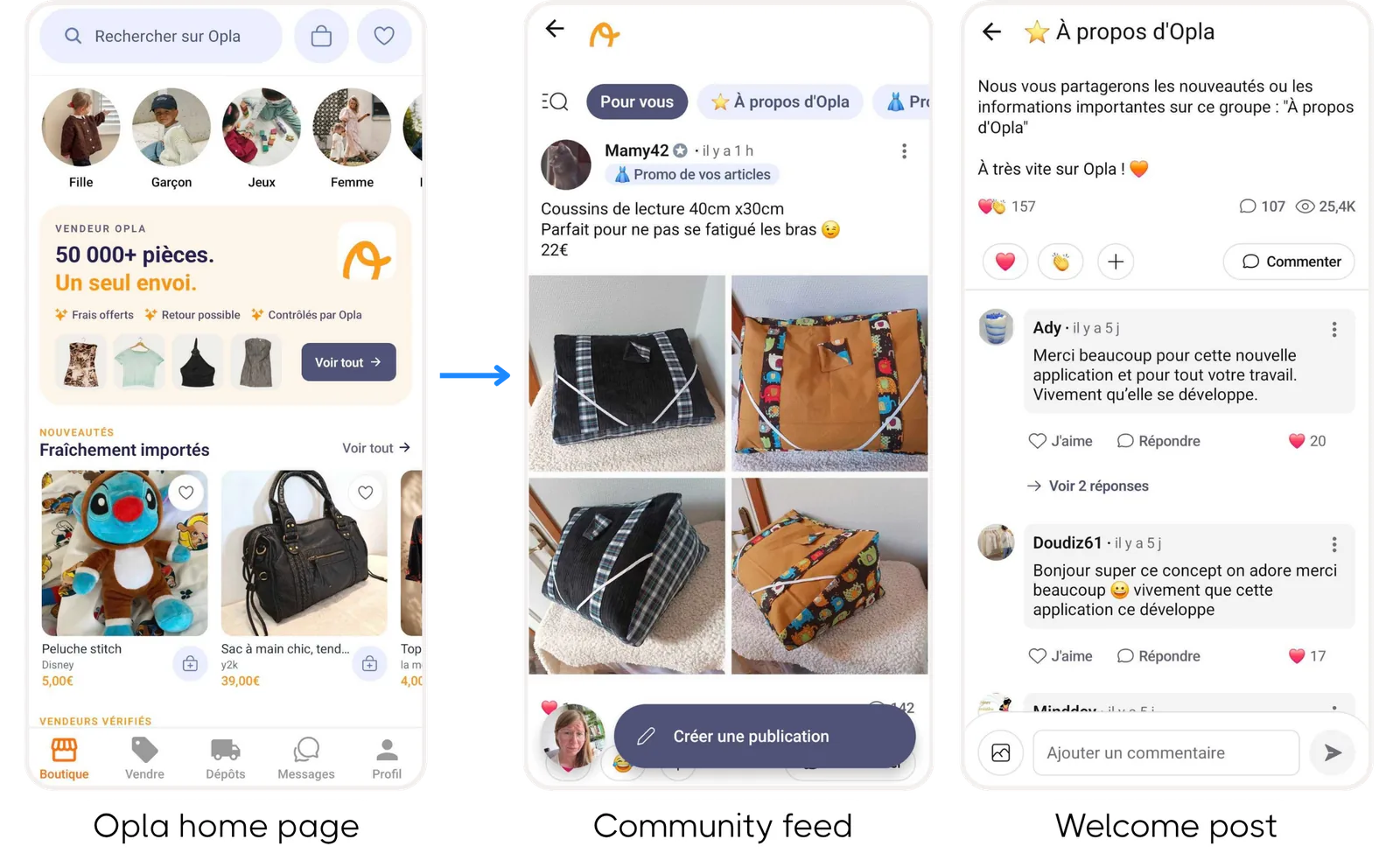
Opla is a fast-growing secondhand marketplace available on iOS and Android. Built for casual and habitual resellers alike, the app covers everything from fashion to furniture, electronics to toys. With a 4.8/5 App Store rating, Opla is building a loyal base of active buyers and sellers across four European markets.
In a secondhand marketplace, the core product is trust between strangers. Opla users were transacting, but doing so in isolation. There was no native space to promote listings, exchange tips, give feedback, or simply connect with others who share a passion for second-hand shopping. Social platforms like Instagram filled part of that gap, but at the cost of pulling users out of the Opla ecosystem.
The goal was to create a sticky, branded community space directly inside the app: one that could host both practical (listing promotion, peer support) and social interactions, without requiring Opla to build the infrastructure from scratch. As Opla stated in the newsletter announcing the community to their users: “A strong community is what sets us apart. Our goal is clear: to build together the largest community around second-hand — and you are its first members.”

Opla integrated Octopus Community using the React Native SDK. The community is supported by AI-powered moderation with custom marketplace rules (blocking external URLs and filtering competitor mentions) and a gamification system active from day one.

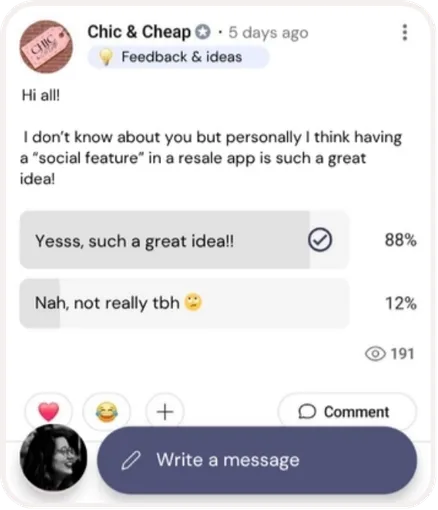
In the first week, Opla users published +3k messages. Sellers immediately grasped the value the community could offer:
Community users opened the Opla app 2.2x more often than non-community users (21 average sessions vs. 9.78). This pattern is consistent across the Octopus communities: the users most drawn to the community are also the app’s most active and engaged users. The community gives them an additional reason to return, reinforcing the loyalty of the users who matter most to the platform.
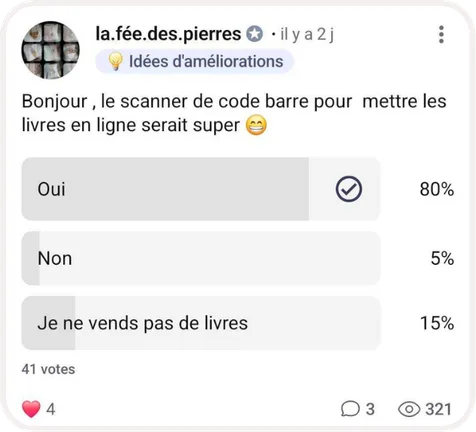
Users didn’t just consume the community: they co-designed it. A new topic group was added within the first week, directly in response to requests made inside the community itself. The gamification system also registered immediately: users began asking questions about the points system, and the Opla team is already thinking about how to recognise and reward their most active members.
Opla operates in a context where brand safety matters: sellers must promote their own listings, not external platforms. Custom moderation rules — blocking external URLs unless they come from the opla.co domain, and filtering competitor references unless positive for Opla — were active from launch. The Opla team could focus on animating the community rather than policing it.

In the secondhand economy, the apps that win long-term are the ones that become habits. The early data suggests Opla’s community has the ingredients to become exactly that.

51% of active app users visited Opla's community in its first week. Over 3,000 messages published, 2.2x more app sessions for community users.
Large international platforms compete on price and volume — but not on trust or belonging. A community gives Opla users something those platforms can’t offer: a space to know who they’re buying from, to build a reputation as a seller, and to connect with others who share the same values around conscious consumption. It transforms a transactional app into a destination people return to because they want to, not just because they need to buy or sell something.
Opla uses Octopus’s AI-powered moderation with custom marketplace rules: external URLs are blocked and competitor references are filtered unless positive for Opla. This keeps the community brand-safe and on-topic, with no manual moderation burden on the Opla team.
Push notifications represent a significant upcoming lever for re-engagement and return visits. The next phase will also deepen the link between the community and the Opla marketplace itself, with a feature to surface each seller’s profile and listings directly from their community activity, turning every post into an entry point to their shop.
Social media channels reach followers who may or may not be active Opla users. An in-app community is different: it lives inside the product, reaches users in the moment of engagement, and keeps every interaction inside the Opla ecosystem. Sellers who post in the community are one tap away from their profile and listings. The community also generates data that stays with Opla — who engages, with what content, and how often — something no external platform provides.
From day one, Opla community members earn points for their contributions — posts, reactions, comments, and more. Gamification drives early habit formation: users who engage with the points system tend to return more frequently. In a marketplace context, it also rewards sellers who are active in the community, creating a virtuous cycle between social engagement and commercial activity.
Within the first week, users had already submitted dozens of suggestions directly inside the community. This is faster and more representative than any survey: the people giving feedback are the app’s most active users, sharing their thoughts in context and in real time. The Opla team responded by adding a new topic group in direct response to user requests, a signal that the feedback loop is already working.
Book 30 minutes with us. We’ll show you the SDK running inside an app like yours.
Ready within 24h — we'll send it straight to your inbox.
Sandbox environment, no credit card required.
Your demo API key will be in your inbox
at within 24h.
In the meantime, explore the
developer docs →