
TL;DR
The best app engagement strategies make valuable behavior easier to discover, complete and repeat. Start with the action that proves the app worked for the user, diagnose the point where the loop breaks, and choose a tactic for that problem. Personalization, social interaction, community, notifications, gamification and fresh content can all help, but none is a strategy by itself. We recommend measuring the intended behavior, a downstream outcome and at least one guardrail so a short-term activity spike does not masquerade as progress.
Engagement is not the art of making people tap more things. It is the work of helping them reach value and giving them a credible reason to do it again.
That distinction changes the strategy. A longer session may mean discovery, learning or conversation. It may also mean the user is lost. A push open can signal timely relevance or a momentary interruption. We judge the tactic by the behavior it changes and what happens after the click.
What is an app engagement strategy?
An app engagement strategy is a plan for increasing meaningful interactions with a mobile product over time. It defines the user behavior that represents value, identifies what prevents that behavior and coordinates product, content and re-engagement changes around it.
The valuable action depends on the app. It could be completing a workout, reviewing a budget, applying for a job, saving a product, publishing a question or replying to another user. Generic activity metrics are useful only when they help explain progress toward that action.
Google Analytics defines an engaged session through time, key-event and screen-view criteria. That is a platform definition, not a product strategy. Teams still need to decide which key event proves the user received value.
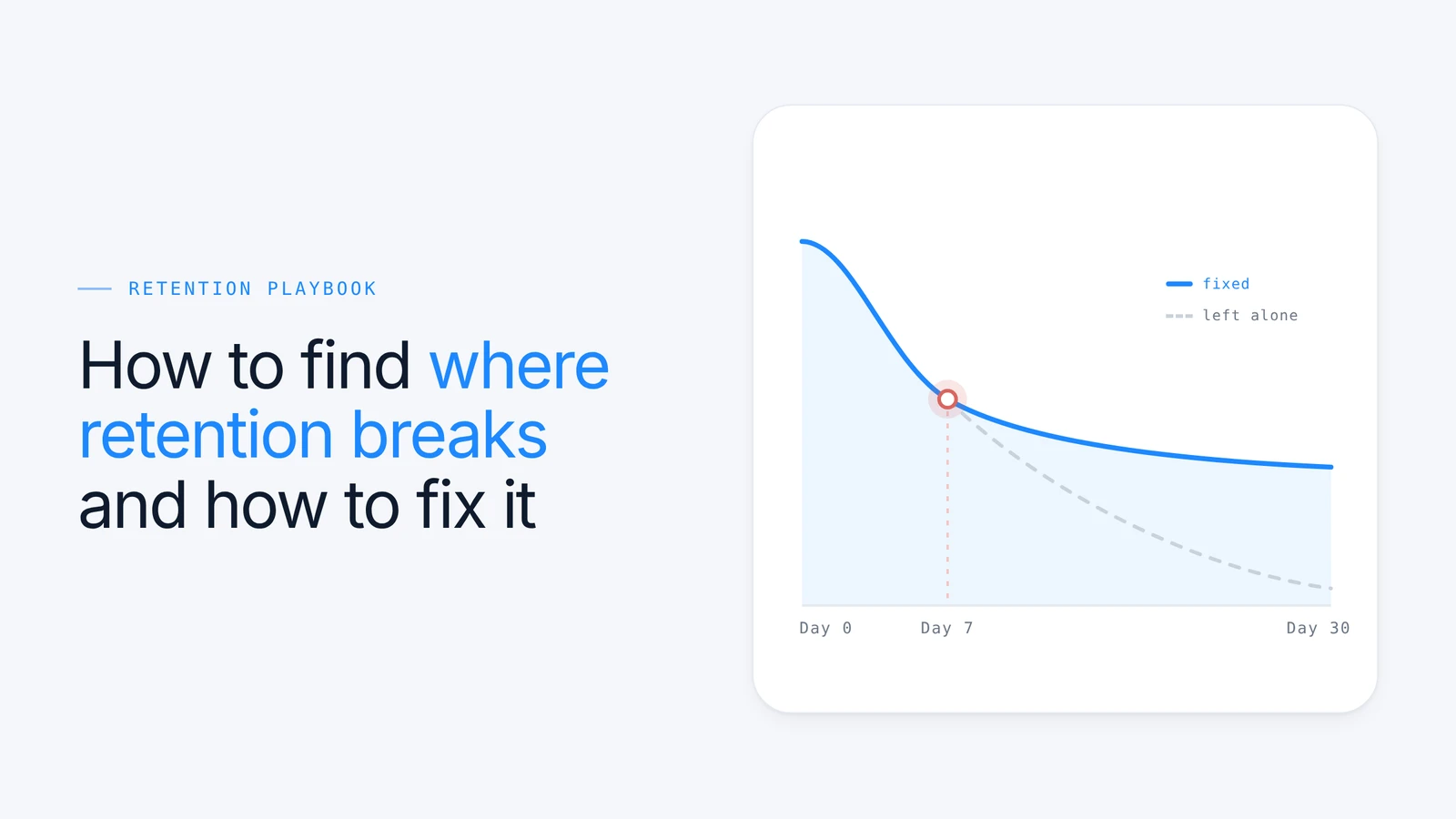
Diagnose the broken part of the loop
Do not begin with “we need gamification” or “we should send more push.” Begin with the failure signal.
| Failure signal | Likely problem | Strategy to test | Primary measure | Guardrail |
|---|---|---|---|---|
| Users never reach the feature | Weak discovery | Better placement, onboarding or contextual entry point | Feature discovery rate | Core-flow completion |
| Users visit but do not act | Unclear value or high friction | Stronger prompt, simpler action or social proof | Key-action completion | Abandonment and errors |
| Contributions receive no response | Thin network or poor routing | Seed experts, groups or notifications | Response rate and time | Low-quality replies |
| Users act once and disappear | No recurring value | Fresh content, progress, relationships or rituals | Repeat action rate | Notification opt-outs |
| Activity rises but product value does not | Vanity engagement | Tie the loop to a core journey and remove empty mechanics | Downstream product outcome | Reports, churn or support load |
This framing prevents a common mistake: applying the same fashionable tactic to every app. The strategy should remove the constraint in front of the valuable behavior.
Make the next valuable action obvious
Many engagement problems are discovery problems. The feature exists, but users do not see it at the moment it becomes relevant.
Use entry points connected to product context. A runner should be able to share a completed session from the result screen. A marketplace seller should reach a listing discussion from the listing. A reader should see the debate attached to the article. Asking users to leave the task, find a community tab and reconstruct the context wastes intent.
Octopus Bridge connects product screens to discussion threads, group destinations and share-to-community actions. It also supports deep links back into the app. The mechanism matters because it turns community from a destination users must remember into part of the journey they already value.
Give users more ways to participate
Consumption has a ceiling. People can read, watch, browse or buy only what the company supplies. Participation adds questions, answers, opinions, progress, recommendations and recognition created by users themselves.
We recommend offering a ladder of participation. Reading and reacting are low-friction entry points. Polls let users take a position without writing. Comments and replies build conversation. Posts, challenges and leadership roles require more confidence. A healthy experience does not demand that every user become a creator.
The Octopus community feed supports text, images, polls, video, topic feeds and six reactions. The right mix depends on the product. Polls can work well for news or research; progress sharing can suit fitness; recommendations and listing discussions can suit commerce. Copying every format into every app is how a feature catalog becomes an empty room.
Personalize relevance without closing off discovery
Personalization should shorten the path to useful content. Followed topics, product behavior, interests and prior interactions can shape the feed, groups or next action. Users also need control, because a model can be confidently wrong.
Octopus smart feeds and groups combine followed topics with recent, trending and new-member content. Editorial boost and deprioritization controls let a team intervene when the algorithm misses a business or community priority.
Do not personalize only the message that brings someone back. If the notification is relevant but the destination is generic, the experience breaks on arrival.
Use notifications as return signals
A notification should report new value, not announce that the app still exists. Replies, relevant group activity, a changed price, an approaching challenge or unfinished progress can justify an interruption. “We miss you” usually cannot.
Android's notification guidance says notifications should be brief, timely and relevant. It specifically advises against encouraging a return without direct value. The message should open the exact destination, respect channel preferences and stop when the action is no longer relevant.
Octopus notifications include one-to-one activity alerts, built-in cooldowns, anti-fatigue throttling, a quiet in-app badge and optional broadcasts. We prefer the least intrusive signal that can complete the loop. A badge may be enough when the user is already inside the app.
Make gamification reward the behavior you want
Points, levels, badges, streaks and challenges can make progress visible. They can also reward noise.
Tie the mechanic to a useful action and monitor quality. A fitness challenge should encourage completed training or constructive support, not daily app opens for their own sake. A community badge can recognize reliable answers, but raw post volume may invite repetition and spam.
Octopus gamification can award points for six participation actions and convert them into custom levels and badges. It is optional and off by default, which is the right starting position. Turn it on when the team knows which behavior deserves reinforcement.
“I ask one question first: where does the user stop? When only 1 to 2% of an app's users ever reach the community, the content is not the problem, discovery is. If members post and nobody answers, the social loop is missing. If something relevant happened and they never heard about it, a notification is justified. What I refuse is gamification on top of an empty feed. It rewards noise.”
Grégoire Mercier, Co-founder and CEO, Octopus Community
Learn from mechanisms, not just headline metrics
Opla's first week shows what happens when the social action fits the product. Sellers used the community to share listings, ask questions and suggest improvements. Fifty-one percent of active app users visited the community and more than 3,000 messages were published by more than 5,000 visitors.
Bankin's weekly featured-post notification provides a different lesson. It increased community views by 122% and comments on highlighted content threefold. The useful takeaway is not “send a weekly notification.” Bankin selected a conversation worth returning to and gave users a direct route to it.
Both examples also need honest interpretation. Opla's 2.2-times session comparison and Bankin's community-user retention result involve users who chose to participate. They are evidence of behavior, not automatic proof that the same tactic will cause the same outcome elsewhere.
Measure behavior change after the click
For every engagement strategy, define three layers of measurement:
- Behavior: Did more users discover and complete the valuable action?
- Outcome: Did the change improve repeat participation, product adoption, conversion or retention?
- Guardrail: Did reports, opt-outs, crashes, low-quality content or support contacts increase?
Use cohorts or an experiment where the decision justifies it. Firebase A/B Testing supports testing product and messaging variants against a primary goal while monitoring additional outcomes. Set the decision rule before the results arrive. Metrics become remarkably persuasive once a team has already fallen in love with the feature.
Build one complete engagement loop
Choose one valuable behavior, make it discoverable, help another user or the product respond, and send a relevant return signal. Measure the whole loop before adding more formats.
Octopus provides native feeds, groups, Bridge connections, notifications, gamification, analytics and managed moderation inside an existing app. Explore the current engagement features or book a demo to map the first loop for your product.
Frequently asked questions
Which app engagement metric matters most?
The most useful metric is the action that shows the user received the product's core value. Pair it with repeat behavior and a downstream outcome. Sessions, time in app and notification opens can explain the journey, but they should not become the goal by default.
When should we use push notifications?
Use push when something relevant has happened or a time-sensitive action deserves attention. Open the exact destination, respect preferences and suppress stale messages. Do not use push to compensate for an app that offers no new value.
Does gamification always improve engagement?
No. Gamification helps when it makes useful progress, contribution or mastery visible. It fails when points reward low-quality volume, create unwanted pressure or distract from the product's real purpose.
What should we do when users view a community but do not post?
First decide whether reading already delivers value. If contribution matters, test lower-friction actions such as reactions or polls, clearer prompts, seeded responses and topic-specific entry points. Measure time to first response because silence after a first post discourages a second one.
How long should an engagement experiment run?
Run it long enough to capture the natural behavior cycle and the downstream outcome. A daily-use app may see an early signal quickly, while a monthly product needs a longer window. Define the interval and minimum sample before launch rather than stopping when the graph looks favorable.
How is an engagement strategy different from a retention strategy?
Engagement strategy improves valuable actions inside and around a session. Retention strategy manages whether users continue returning across a defined lifecycle window. The two are connected, but an engagement tactic can increase activity without improving retention.