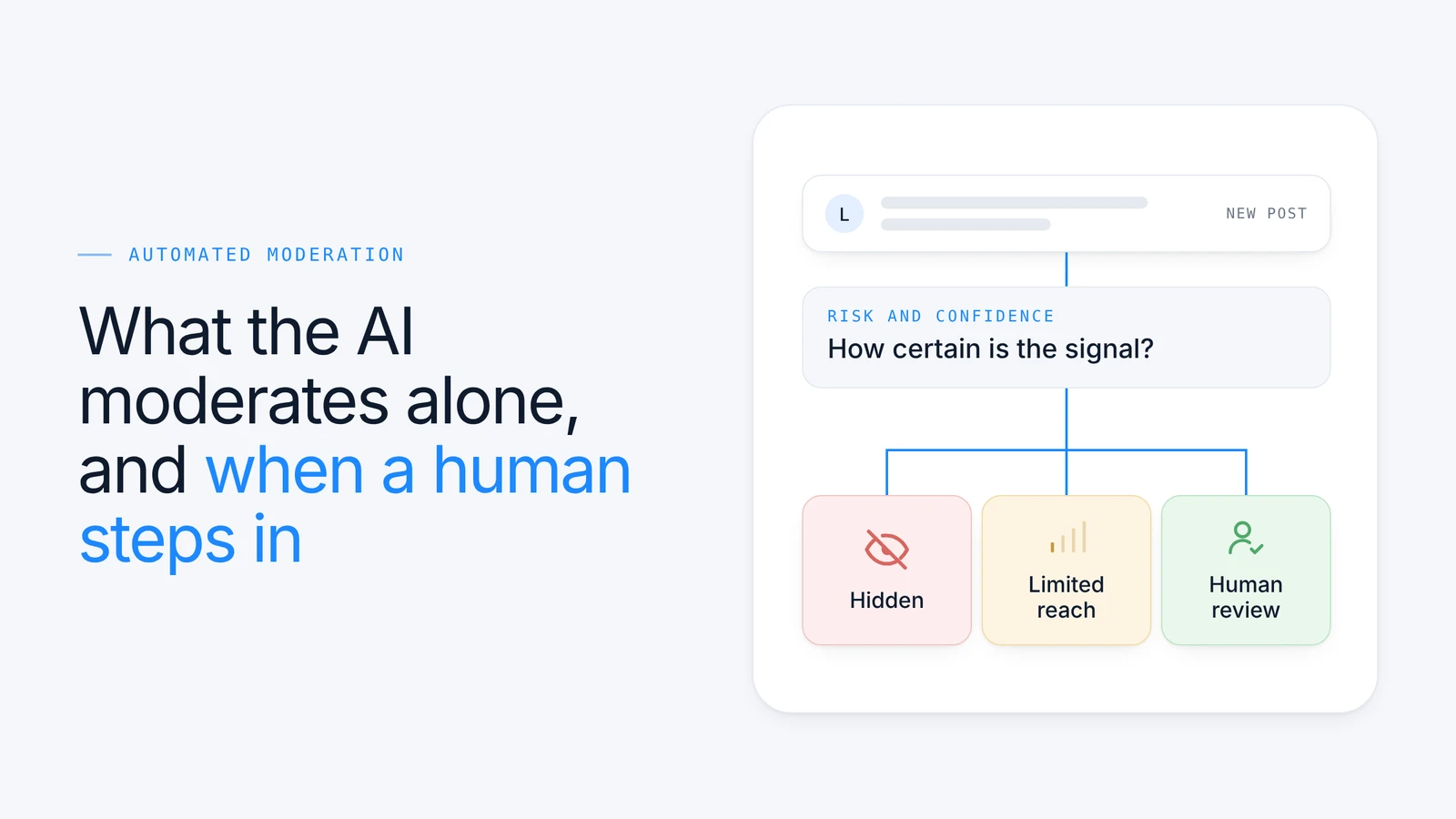
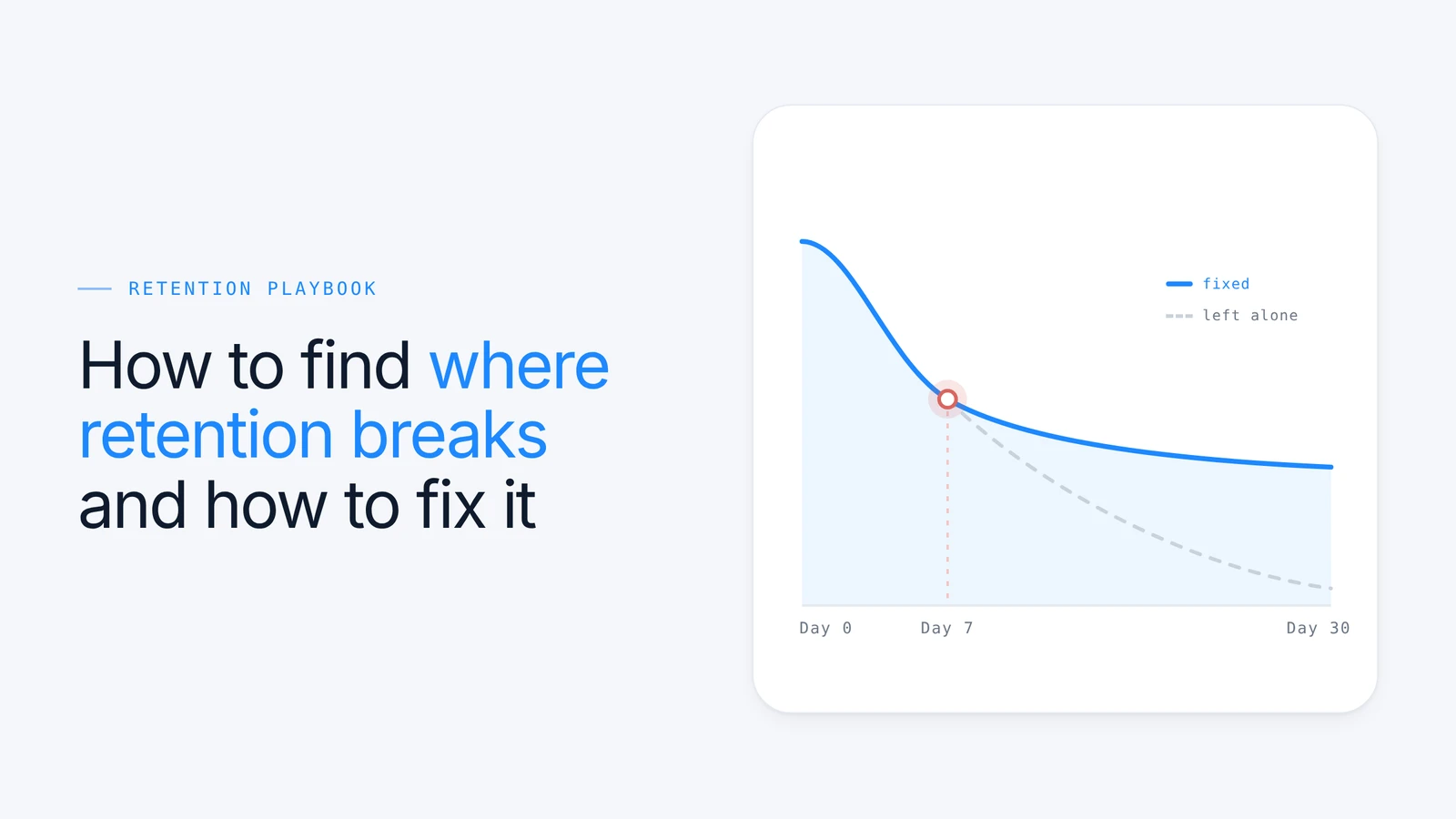
TL;DR
Mobile app retention strategies should repair the reason users stop returning, not simply send them more reminders. Define the app's natural return interval, find the lifecycle stage where value breaks, and choose an intervention for that failure. Early activation, recurring utility, personalization, saved progress, social value and relevant re-engagement can all strengthen retention. We recommend measuring comparable cohorts across a pre-defined window and separating users offered a feature from the people who chose to use it.
Retention is not a push-notification problem. It is a value problem that notifications can occasionally help expose.
Users return when the next session promises something useful: new information, progress, a completed task, a response, a relationship or a timely change. The retention strategy should make that promise credible at the frequency the product naturally supports.
What is a mobile app retention strategy?
A mobile app retention strategy is a coordinated plan for increasing the share of users who return to an app and continue receiving value across a defined period. It combines product, lifecycle and measurement decisions rather than relying on a single campaign or feature.
The time window must fit the product. Day 1, Day 7 and Day 30 retention are common, but a monthly finance tool, weekly training plan and daily game should not share one definition of a healthy return. Adjust's Mobile App Trends 2026 report shows how sharply session behavior differs across gaming, commerce and finance. External benchmarks can provide context; the app's own comparable cohorts should set the operating target.
Diagnose where retention breaks
Overall retention shows that users left. It does not explain why. Segment the lifecycle before prescribing a strategy.
| Lifecycle break | Evidence to inspect | Strategy to test |
|---|---|---|
| Users never reach first value | Onboarding completion, time to key action, errors | Shorten the path to activation |
| Users succeed once but do not return | Second-session rate, unfinished progress, stated expectations | Make the next value visible |
| Value becomes repetitive | Feature adoption, content freshness, declining frequency | Add recurring utility or relevant variety |
| Users lose relevance | Segment, preference and recommendation performance | Improve personalization and user control |
| Users have value but forget to return | Dormancy by event, notification eligibility and timing | Send a contextual return signal |
| A specific cohort weakens | Version, platform, acquisition source, geography | Fix the shared product or technical issue |
Support tickets, interviews, community discussions and reviews add the reason behind the behavior. Do not assume that the most visible drop-off is the root cause. A user who leaves during onboarding may be reacting to an unclear value proposition rather than the number of screens.
Win the second session during the first
Users who never reach the product's core value have no evidence that returning will be worthwhile. We recommend designing onboarding around one meaningful result, not a tour of everything the app can do.
The first session should also make the second one easy to imagine. Show the next lesson, remaining progress, a saved preference, an upcoming challenge, a response they can expect or information that will change. The product is establishing continuity, not just completion.
Ask for permissions when their benefit is visible. A notification prompt before the user has experienced anything worth hearing about spends trust too early. The same applies to profile fields, contacts and location.
Create recurring value at the product's natural frequency
Retention grows when each return can produce new or accumulated value. The source may be changing data, fresh inventory, progress, recommendations, content, challenges, conversations or peer support.
Past investment can make the next session better. Saved goals, history, relationships, followed topics and personalized preferences reduce the work required to resume. This is healthy switching cost because it comes from accumulated usefulness, not obstruction.
Daily use is not automatically the goal. If a travel app solves an occasional need well, artificial daily streaks can make the product worse. We optimize for the next meaningful return, even when that return is next month.
Add user-to-user value when the product supports it
A purely functional app must create every new reason to return itself. Community adds value generated by other users: replies, advice, discussion, recognition, group activity and shared progress.
The social layer should extend the core product. Runners can share training and encourage one another. Job seekers can exchange interview advice. Marketplace users can discuss listings and build trust. A generic feed disconnected from the product gives users one more place to scroll and the team one more place to maintain.
Octopus connects these loops through native feeds and groups, Bridge links to product context, notifications, gamification and moderation. The core feed and AI moderation are included by default. Optional engagement features can be added when the lifecycle diagnosis justifies them.
“Teams reach for win-back campaigns far too early. Before approving one, I want proof that users found value at least once. Otherwise we are reminding people of something they never liked. Our weekly notifications follow that rule: we only push posts members have already engaged with. The signal I trust most is a member coming back to answer someone else's question. Nobody had to remind them.”
Hélène Quériault, Co-founder and COO, Octopus Community
Re-engage users around real value
A useful re-engagement message answers “why now?” A reply arrived, a price changed, a challenge is ending, a saved item returned or new content matches a stated interest. The notification should open the exact destination and disappear when the event is stale.
Android's notification guidance advises against sending a return prompt that offers no direct value. It also recommends clear purpose, user-controlled channels and actions tied to the content.
Win-back campaigns deserve their own logic. A dormant user may no longer have the same need, product state or permission context. Segment by the last valuable action and the likely reason for disengagement. Sending the same “come back” offer to every dormant account hides the diagnosis and can train users to wait for incentives.
Test retention on comparable cohorts
Community participants, feature adopters and notification openers often begin with higher intent. Comparing them with everyone else can exaggerate the effect of a strategy.
When retention is the business case, compare the whole cohort offered the intervention with a control group. Define the eligibility rules, start date, retention interval, primary outcome and guardrails before launch. Firebase A/B Testing supports testing product and messaging variants against explicit goals before a wider rollout.
Use three views together:
- Cohort retention: What share returns at the chosen interval?
- Behavioral pathway: Which actions distinguish retained users before they return?
- Guardrails: Did reports, opt-outs, crashes, support contacts or cancellations worsen?
If a randomized test is not practical, use matched cohorts or a phased rollout and label the result as observational. Strong evidence does not need theatrical certainty.
What controlled community rollouts teach us
RunMotion used a 90/10 Android control-group rollout. The cohort with community access showed 40% higher retention than the control group. Community users also recorded 3.7 times more sessions, while monthly challenges and a visible notification badge gave runners concrete reasons to participate and return.
Unchaind began with a short iOS A/B test. Within one week, the app measured a 12% retention uplift against the control group and then expanded to Android. Community was presented during onboarding and connected to the product's central job: sustained peer support during addiction recovery.
The numbers come from different products and windows, so they should not be averaged into a universal promise. The repeatable lesson is the operating pattern: connect community to core value, make it discoverable, create a reason to return and test access against a comparable cohort.
Review retention as the product changes
Retention strategy is a cycle, not a launch plan.
- Define the natural return interval and business outcome.
- Locate the lifecycle break by cohort.
- Add the smallest intervention that addresses the likely cause.
- Measure the intended behavior, retention outcome and guardrails.
- Keep, revise or stop the strategy based on the evidence.
Repeat the analysis after major releases, acquisition shifts or audience changes. A tactic that worked for early adopters can fail when the product reaches a broader market.
Give users a reason to choose the app again
Octopus adds user-generated content, groups, product-connected conversations, notifications, gamification and managed moderation to an existing app. Explore the business case for an in-app community or book a demo to evaluate the retention loop and measurement plan for your product.
Frequently asked questions
What is a good mobile app retention rate?
There is no universal good rate. Retention varies by category, audience, acquisition source, business model and measurement window. Use external benchmarks for context, then compare equivalent cohorts within your own product and improve from a documented baseline.
Which retention window should we use?
Choose the point at which a healthy user would naturally need or want the product again. Daily-use apps may prioritize early intervals, while weekly or monthly products need longer windows. Keep the definition stable when comparing cohorts.
Can push notifications improve app retention?
Yes, when they surface value that already exists, such as a reply, changed status or timely next action. Notifications do not create recurring value by themselves, and irrelevant volume can increase opt-outs or deletion.
How can community improve retention?
Community can create fresh content, relationships, answers and recognition that give users more reasons to return. It works best when participation supports the app's core job, is easy to discover and is operated safely from launch.
Should we focus on onboarding or reactivation first?
Fix activation first when new users never reach the core value. Reactivation cannot repair an experience users never understood. If activated users later disengage, diagnose the recurring-value break and target the win-back message to that cause.
How do we know whether a retention strategy caused the result?
Use a control group or randomized rollout where feasible and compare everyone eligible for the intervention, not only adopters. Predefine the interval and outcome. Without a control, report the relationship as observational and investigate alternative explanations.